How to Set Up Status Page Monitoring for Quantum Computing Infrastructure
Quantum computing infrastructure demands specialized monitoring approaches. Learn how to configure status page monitoring for quantum systems, handle decoherence alerts, and communicate complex technical issues effectively.
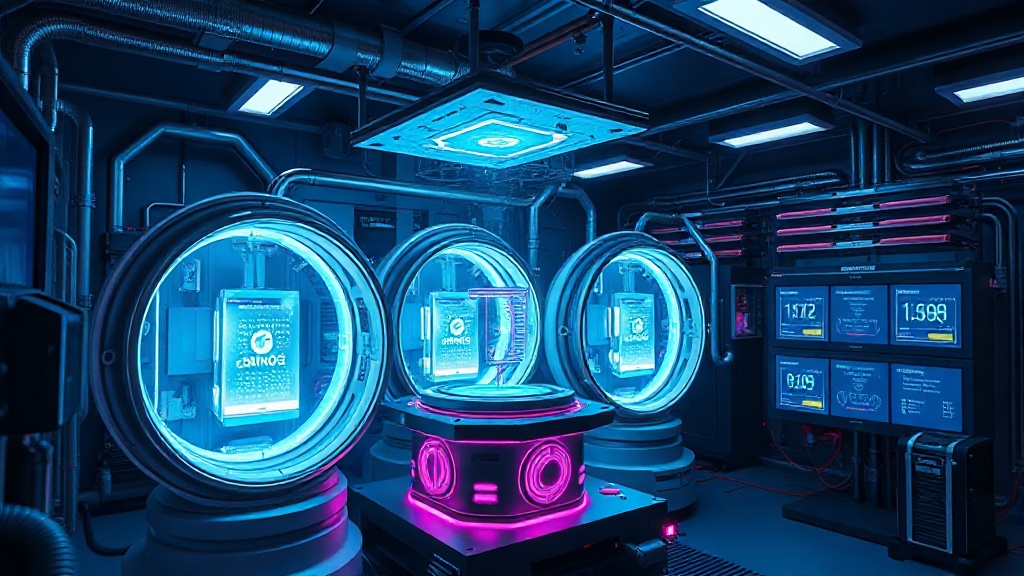
TL;DR: Quantum computing infrastructure requires unique monitoring strategies due to quantum decoherence, error correction needs, and environmental sensitivity. This guide covers setting up status page monitoring for qubits, quantum gates, error rates, and supporting classical systems while ensuring clear communication to technical stakeholders.
Understanding Quantum Infrastructure Monitoring Challenges
Quantum computing infrastructure presents monitoring challenges unlike any classical system. Your quantum processors operate in conditions near absolute zero, require precise electromagnetic isolation, and maintain quantum states that can collapse from the slightest interference.
Traditional uptime monitoring falls short when dealing with quantum decoherence times measured in microseconds. You need monitoring systems that track quantum fidelity, gate error rates, and the complex interplay between quantum and classical components.
Modern quantum systems in 2026 typically integrate superconducting qubits, ion traps, or photonic systems with classical control electronics, cryogenic systems, and high-speed classical processors for error correction. Each component requires specialized monitoring approaches.
Key Metrics for Quantum System Monitoring
Quantum-Specific Metrics
Your quantum infrastructure monitoring should track coherence times (T1 and T2), which indicate how long qubits maintain their quantum states. T1 measures energy relaxation time, while T2 measures dephasing time.
Gate fidelity represents the accuracy of quantum operations. Monitor single-qubit gate fidelities above 99.9% and two-qubit gate fidelities above 99% for production quantum computing workloads.
Quantum volume provides a holistic measure of your system's computational capability, combining qubit count, gate fidelity, and connectivity. Track this metric to assess overall system performance degradation.
Environmental Monitoring
Temperature fluctuations critically impact quantum systems. Monitor dilution refrigerator temperatures at multiple stages, ensuring your base temperature stays below 15 millikelvin for superconducting systems.
Electromagnetic interference can destroy quantum states instantly. Deploy monitoring for magnetic field variations, electrical noise, and radio frequency interference around your quantum processors.
Vibration monitoring prevents mechanical disturbances that affect quantum coherence. Track building vibrations, HVAC systems, and nearby equipment that might introduce unwanted oscillations.
Setting Up Quantum Infrastructure Status Monitoring
Classical Support Systems
Start with monitoring the classical infrastructure supporting your quantum processors. Your cryogenic systems, laser controllers, microwave generators, and classical computers require traditional monitoring approaches.
Set up alerts for compressor failures in your dilution refrigerator systems. These failures can warm your quantum processor within minutes, requiring immediate attention and potentially hours of cool-down time.
Monitor your classical control systems that orchestrate quantum operations. These high-performance computers handle real-time feedback loops for quantum error correction and must maintain microsecond response times.
Quantum Processor Monitoring
Implement continuous calibration monitoring for your quantum gates. Daily recalibration prevents drift in gate parameters that could degrade computational accuracy over time.
Track quantum error correction performance if your system implements it. Monitor logical error rates and the overhead required for error correction protocols.
Set up automated benchmarking routines that run quantum circuits with known outcomes. These synthetic tests can detect subtle performance degradations before they impact production workloads.
Real-Time Status Updates
Quantum systems require near-instantaneous status updates due to their sensitivity. Configure your monitoring systems to update status indicators within seconds of detecting issues.
Implement automated incident creation when quantum fidelity drops below operational thresholds. Your status page should reflect these incidents immediately, as quantum computing workloads cannot tolerate degraded performance.
Design escalation procedures that account for the specialized expertise required for quantum systems. Not all on-call engineers can diagnose quantum decoherence issues or cryogenic system failures.
Configuring Status Page Components
Service Component Structure
Organize your status page around logical quantum computing components. Create separate status indicators for quantum processors, classical control systems, cryogenic infrastructure, and supporting laboratory equipment.
Group related components hierarchically. For example, under "Quantum Processor Alpha," include sub-components for individual qubit arrays, gate controllers, and readout systems.
Implemente dependency mapping that reflects how quantum system failures cascade. A dilution refrigerator failure affects all quantum processors it cools, while individual qubit failures may only impact specific computational regions.
Incident Severity Levels
Define severity levels specific to quantum computing operations. "Critical" incidents should include complete loss of quantum coherence, cryogenic system failures, or safety-related issues in laboratory environments.
"High" severity covers significant performance degradations like reduced quantum volume, increased error rates above operational thresholds, or failures of quantum error correction systems.
"Medium" severity includes planned maintenance windows, partial performance impacts, or degradation that doesn't immediately affect running computations.
Communication Templates
Develop incident communication templates that explain quantum computing concepts clearly. Your users likely include researchers, enterprise customers, and technical partners who need different levels of detail.
Create templates for common quantum-specific incidents like decoherence events, gate calibration failures, and environmental interference. These templates should explain the technical cause and expected resolution timeline.
Include estimated recovery procedures in your communications. Quantum systems often require specific cool-down times, recalibration periods, or manual interventions that affect resolution timelines.
Advanced Monitoring Strategies
Predictive Monitoring
Implement trend analysis for quantum metrics that degrade gradually. Coherence times and gate fidelities often show warning signs before crossing critical thresholds.
Use machine learning models trained on historical quantum performance data to predict maintenance needs. These models can identify patterns indicating upcoming component failures or performance degradations.
Monitor correlations between environmental factors and quantum performance. Temperature variations, electromagnetic interference, and building vibrations often precede quantum system issues.
Integration with Quantum Software Stacks
Connect your monitoring systems to quantum software development platforms. Track job queue lengths, compilation times, and execution success rates alongside hardware metrics.
Monitor quantum circuit optimization and transpilation performance. Degraded classical processing can impact quantum job execution even when hardware operates correctly.
Implement synthetic quantum workload monitoring that runs representative algorithms continuously. These synthetic jobs provide early warning of performance issues affecting real computational workloads.
Multi-Site Quantum Networks
For distributed quantum computing networks, implement cross-site monitoring that tracks quantum entanglement quality and network connectivity between quantum processors.
Monitor quantum key distribution systems if your infrastructure supports quantum cryptography. These systems require specialized monitoring for photon transmission rates and key generation performance.
Track synchronization between distributed quantum systems. Quantum networks require precise timing coordination that classical monitoring tools may not adequately cover.
Best Practices for Quantum Status Pages
User Experience Considerations
Provide different status page views for different user types. Research users may want detailed quantum metrics, while enterprise customers prefer high-level service availability indicators.
Implement real-time quantum performance dashboards that show current system capabilities. Include metrics like available qubits, current quantum volume, and expected job execution times.
Offer subscription options for different types of notifications. Some users only care about complete outages, while others need alerts for any performance degradation that might affect their specific quantum algorithms.
Maintenance Window Management
Schedule quantum system maintenance during optimal windows that minimize user impact. Consider global research schedules, enterprise customer time zones, and the time required for quantum system stabilization after maintenance.
Provide detailed maintenance notifications that explain the technical work being performed. Quantum system maintenance often involves complex procedures that affect different capabilities in different ways.
Implement staged maintenance rollouts for multi-processor quantum facilities. Maintain partial service availability by scheduling maintenance windows for different quantum processors at different times.
Conclusion
Monitoring quantum computing infrastructure requires specialized approaches that account for quantum mechanics, extreme environmental sensitivity, and the integration of quantum and classical systems. Your status page monitoring strategy must track quantum-specific metrics while maintaining clear communication about complex technical issues.
Platforms like Livstat can help implement these monitoring strategies by providing the infrastructure for real-time status updates and incident communication workflows adapted for quantum computing environments. Success depends on understanding the unique characteristics of quantum systems and implementing monitoring strategies that match their operational requirements.
Focus on building monitoring systems that can scale with the rapidly evolving quantum computing landscape while maintaining the precision and reliability that quantum computing workloads demand.


