How to Write Status Page Updates That Reduce Customer Anxiety in 2026
Learn the exact language patterns, timing, and structure that calm worried customers during outages. Practical templates and examples included.
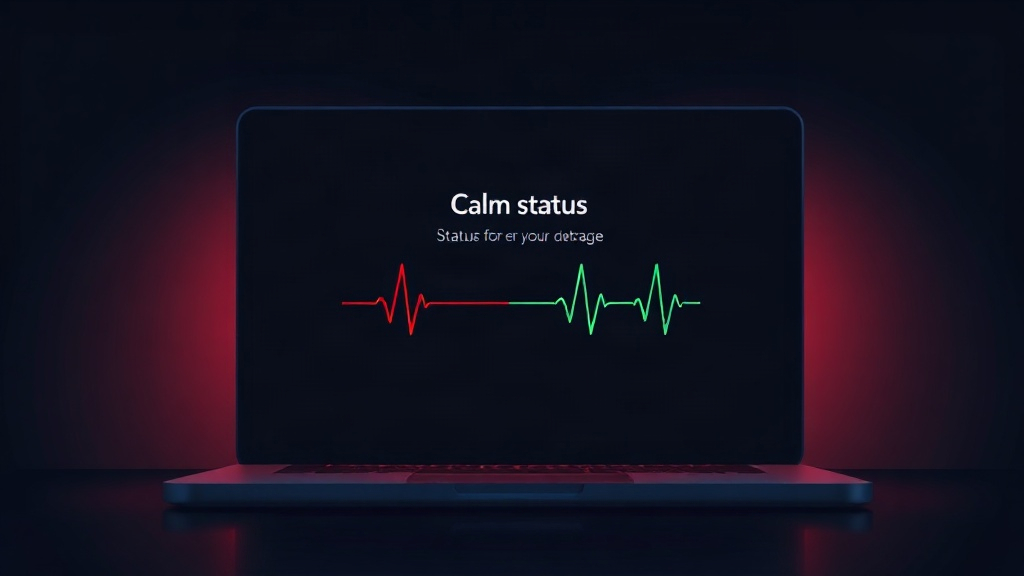
TL;DR: Anxiety during outages comes from uncertainty, not downtime itself. Reduce it by writing status updates that name the problem plainly, give a real timeframe, show visible progress, and post more often than feels necessary. Vague, delayed, or overly technical updates make customers assume the worst — clear, human ones keep them patient.
When your service goes down, customers don't panic because of the outage. They panic because they don't know what's happening, whether you know it's happening, or when it'll be fixed. Silence and vague language fill that gap with worst-case assumptions.
The words you choose in a status update directly affect how many support tickets you get, how many customers churn, and how your brand is remembered after the dust settles. Here's how to write updates that keep people calm instead of catastrophizing.
Why Vague Updates Backfire
"We are aware of an issue and are investigating" is the single most anxiety-inducing sentence in incident communication. It tells customers nothing: not what's broken, not who's affected, not when to expect news.
A 2025 survey of SaaS support teams found that generic "investigating" messages correlated with a 40% higher support ticket volume during incidents compared to updates that named the specific affected feature. When people don't know if their workflow is broken, they open a ticket to find out — multiplying your support load exactly when your team is stretched thinest.
Specificity isn't just good customer service. It's a load-bearing wall that keeps your inbox from collapsing.
The Four Elements Every Update Needs
Every status update, regardless of severity, should answer four questions in order:
- What's broken? Name the specific feature or system, not "some services."
- Who's affected? All users, a region, a plan tier, or a specific integration.
- What are you doing about it? Even "our engineers are rolling back the deploy" beats silence.
- When's the next update? A concrete time, not "soon."
Here's the difference in practice:
Weak: "We're experiencing some issues and are looking into it."
Strong: "Login is failing for users on our EU servers as of 14:32 UTC. Our team has identified a database connection issue and is deploying a fix. Next update in 20 minutes or sooner if resolved."
The second version doesn't reduce the outage. It reduces the anxiety around it, because it replaces uncertainty with facts.
Timing Matters More Than Perfection
Customers forgive downtime far more readily than they forgive silence. A gap of more than 30 minutes between updates — even when nothing has changed — reads as abandonment.
If you genuinely have no new information, say so:
"No change yet. Our team is still working on the database rollback. Next update by 15:15 UTC."
This single sentence, posted on schedule, does more for customer trust than a beautifully worded update posted an hour late. Predictability is the product here, not eloquence.
A practical cadence:
- Critical outages (full service down): update every 15-20 minutes
- Partial outages (degraded feature): update every 30-45 minutes
- Minor issues: update every 1-2 hours or on status change
Set these intervals before an incident happens, and stick to them even when there's nothing new to report.
Match Your Tone to the Severity — Don't Overcorrect
A typo in your billing dashboard doesn't need the same tone as a full data outage. Overdramatic language on a minor issue trains customers to panic over small things; underplaying a major outage feels dishonest once the scale becomes clear.
Calibrate tone to actual impact:
- Minor: Calm, brief, almost routine. "Search results may load slower than usual. No action needed."
- Major: Direct and serious, without alarmism. "We're experiencing a significant outage affecting checkout for all customers. This is our top priority."
- Critical/security: Formal, precise, and honest about what you don't yet know. "We detected unauthorized access to a subset of user accounts at 09:14 UTC. We've locked affected accounts and are investigating scope. Full details will follow within 2 hours."
Customers can tell when severity language doesn't match the actual disruption they're experiencing. Mismatched tone erodes trust faster than the outage itself.
Words and Phrases to Avoid
Certain phrases trigger distrust because they've been overused to mean nothing:
- "We take this very seriously" (said after every incident, means nothing)
- "Minor disruption" (when it's clearly not minor)
- "Some users may experience issues" (vague scope, feels evasive)
- "Shortly" or "soon" (no anchor, feels like a stall tactic)
Replace them with concrete substitutes: name the actual impact, give a real percentage or region if you know it, and use specific timeframes even if they're estimates ("we expect a fix within the hour" beats "soon" every time).
Structuring the Resolution Update
How you close an incident shapes what customers remember about it. A resolution update should include:
- Confirmation the issue is fixed, not just that a fix was deployed
- The actual duration of impact, in plain terms
- What caused it, at a level customers can understand (save the deep technical detail for a postmortem)
- What you're doing to prevent recurrence, even briefly
Example:
"Resolved at 15:47 UTC. Checkout was unavailable for approximately 52 minutes due to a failed database migration. We've rolled back the change and added an automated check to catch this before it reaches production again. A full writeup will be posted within 48 hours."
This closes the loop instead of leaving it open-ended, which is often where lingering anxiety comes from — customers wondering if it'll happen again tomorrow.
Automate the Discipline, Not the Empathy
The hardest part of incident communication isn't writing good updates — it's remembering to post them on time while also fixing the actual problem. This is where tooling matters. A status page platform like Livstat can trigger automated update reminders on a fixed interval, pre-fill affected component names from your monitoring data, and push updates simultaneously to your page, email subscribers, and Slack — so your team's cognitive load during an incident goes toward the fix, not the formatting.
But automation should handle logistics, not language. Templates can hold your structure; a human should still write the sentence that says what's actually happening. Customers can tell the difference between a templated update and a copy-pasted non-answer.
A Quick Pre-Incident Checklist
Before your next outage happens, make sure you have:
- Pre-approved severity levels with matching tone guidelines
- A fixed update cadence for each severity level
- A named owner responsible for posting updates during incidents (separate from whoever's fixing the issue)
- A resolution template that includes cause, duration, and prevention
Key Takeaway
Customer anxiety during outages isn't caused by downtime — it's caused by not knowing what's happening. Specific, timely, appropriately-toned updates replace fear with facts, and facts are what keep customers patient while you fix the real problem. Write for the person refreshing your status page every five minutes, not for a compliance checklist.