How to Create Incident Response Playbooks for SaaS Startups
Learn how to build effective incident response playbooks that minimize downtime and customer impact. Essential framework for SaaS startups to handle outages professionally.
TL;DR: Incident response playbooks are structured documents that guide your team through outages and service disruptions. They reduce response time, minimize customer impact, and ensure consistent communication. This guide covers the essential elements every SaaS startup needs in their playbooks.
When your SaaS platform goes down at 2 AM, you don't have time to figure out who to call or what steps to take. Your customers are already frustrated, your team is scrambling, and every minute of downtime costs you revenue and trust.
This is why incident response playbooks aren't optional for SaaS startups — they're survival tools.
What Are Incident Response Playbooks?
Incident response playbooks are step-by-step guides that tell your team exactly what to do when things go wrong. They're like fire drill procedures, but for your technical infrastructure.
These documents eliminate guesswork during high-stress situations. Instead of wasting precious minutes deciding who should do what, your team can immediately spring into action with clear roles and responsibilities.
A good playbook covers everything from initial detection to post-incident review. It's your roadmap back to stability.
Why SaaS Startups Need Specialized Playbooks
SaaS startups face unique challenges that generic incident response plans don't address. You're likely running lean teams where engineers wear multiple hats. You can't afford the lengthy processes that enterprise companies use.
Your customers expect 99.9% uptime, even though you might not have dedicated DevOps engineers or 24/7 support staff. When incidents happen, you need to move fast with limited resources.
SaaS incidents also have immediate customer visibility. Unlike internal IT problems, your outages are public. Customers notice immediately when they can't access your service, making rapid response and clear communication critical.
Essential Components of SaaS Incident Response Playbooks
Incident Classification System
Start by defining incident severity levels. Most SaaS startups use a four-tier system:
- Severity 1 (Critical): Complete service outage affecting all customers
- Severity 2 (High): Major feature unavailable or significant performance degradation
- Severity 3 (Medium): Minor feature issues affecting some customers
- Severity 4 (Low): Cosmetic issues or non-customer-facing problems
Each severity level should trigger different response procedures and escalation paths.
Role Assignments and Contact Information
Clearly define who does what during incidents. At minimum, assign these roles:
- Incident Commander: Coordinates the response and makes decisions
- Technical Lead: Focuses on diagnosis and resolution
- Communications Lead: Handles customer updates and stakeholder notifications
- Executive Sponsor: Senior person who can authorize major decisions
Include multiple contact methods (phone, Slack, email) and backup assignments for each role. Someone needs to be reachable at all times.
Communication Templates
Prepare templated messages for different scenarios. This ensures consistent, professional communication when your team is under pressure.
Create templates for:
- Initial incident acknowledgment
- Status updates during resolution
- Resolution confirmation
- Post-incident summary
Your templates should be specific enough to be useful but flexible enough to customize for different situations.
Escalation Procedures
Define clear escalation triggers and timelines. For example:
- Escalate to senior management if resolution time exceeds 2 hours
- Involve external vendors if their services are suspected causes
- Notify legal/compliance teams for data-related incidents
Don't make escalation feel like failure. Sometimes bringing in additional help is the fastest path to resolution.
Creating Your First Playbook: Step-by-Step
Step 1: Choose Your First Scenario
Don't try to cover every possible incident in your first playbook. Start with your most likely or impactful scenario.
For most SaaS startups, this is typically "Complete service unavailable" or "Database connection failures." Pick something that's actually happened to you or could realistically happen.
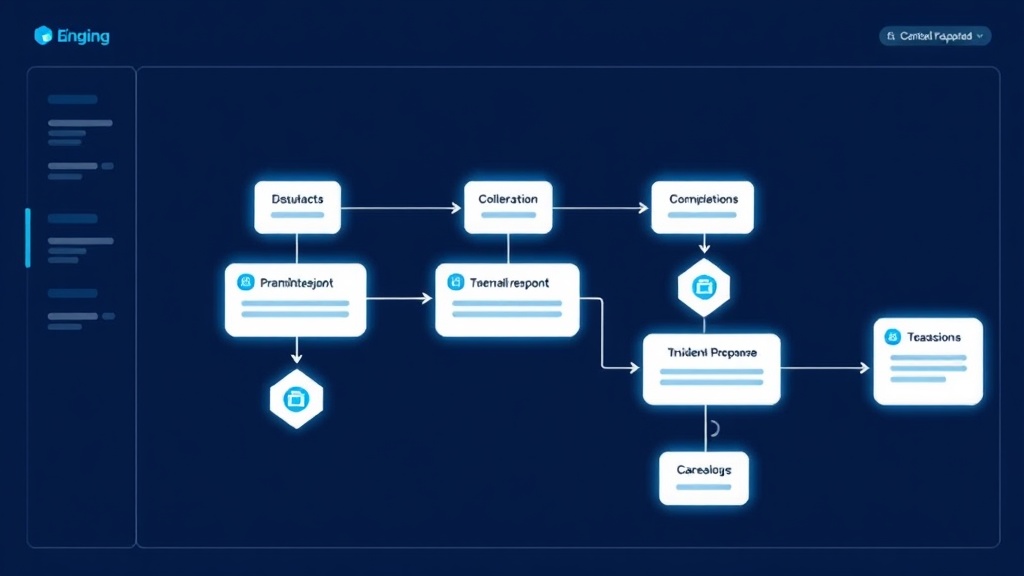
Step 2: Map Out the Response Flow
Document the ideal response sequence:
- How the incident gets detected (monitoring alerts, customer reports)
- Who gets notified first
- Initial assessment steps
- Common troubleshooting procedures
- When to update customers
- Resolution verification steps
Be specific about timeframes. "Acknowledge the incident within 5 minutes" is better than "acknowledge quickly."
Step 3: Include Technical Runbooks
Your playbook should reference or include technical procedures for common fixes. This might include:
- Server restart procedures
- Database failover steps
- CDN cache clearing
- Load balancer reconfiguration
Don't assume everyone knows how to perform these tasks. Include command examples and screenshots where helpful.
Step 4: Test and Refine
Run tabletop exercises with your team. Present a scenario and walk through your playbook step by step. You'll quickly discover gaps, unclear instructions, or missing contact information.
Schedule these exercises quarterly, and update your playbooks based on lessons learned from real incidents.
Integration with Monitoring and Status Pages
Your incident response playbooks should integrate seamlessly with your monitoring and communication tools. When alerts fire, your team should know exactly which playbook to follow.
Platforms like Livstat combine monitoring and status pages, making it easier to execute your playbooks. You can automatically update customers while your team focuses on resolution, ensuring consistent communication throughout the incident lifecycle.
Consider how your playbooks will trigger status page updates. Define which incident types require immediate customer notification versus internal-only responses.
Common Mistakes to Avoid
Making Playbooks Too Complex
Startup playbooks should be actionable under stress. If your team can't follow the procedures during a real incident, they're too complicated.
Keep procedures concise and use simple language. Bullet points work better than lengthy paragraphs when someone's trying to resolve an outage at 3 AM.
Forgetting About Customer Communication
Technical teams often focus entirely on fixing the problem and forget to update customers. Build communication checkpoints into every playbook.
Customers appreciate honest, frequent updates even when you don't have a solution yet. "We're still investigating the database connectivity issues" is better than silence.
Creating Write-Only Playbooks
Many startups create playbooks once and never update them. Your procedures will become outdated as your infrastructure evolves and your team grows.
Schedule regular playbook reviews and updates. Assign ownership to specific team members who are responsible for keeping procedures current.
Measuring Playbook Effectiveness
Track key metrics to evaluate how well your playbooks are working:
- Mean Time to Acknowledgment (MTTA): How quickly you recognize and start responding to incidents
- Mean Time to Resolution (MTTR): How long it takes to fully resolve incidents
- Customer communication frequency: How often you update customers during incidents
- Playbook adherence rate: How often your team actually follows the documented procedures
These metrics help you identify areas for improvement and demonstrate the value of your incident response program to stakeholders.
Conclusion
Incident response playbooks are your startup's insurance policy against service disruptions. They transform chaotic emergencies into manageable, systematic responses.
Start simple with one well-documented scenario, then expand your coverage over time. Remember that the best playbook is one your team will actually use when everything is on fire.
Your customers trust you with their business. Well-crafted incident response playbooks help ensure you can maintain that trust even when things go wrong.


