How to Monitor API Uptime and Response Times in 2026
Learn to set up comprehensive API monitoring with response time tracking, alerting systems, and performance analysis. Essential strategies for 2026's API reliability standards.
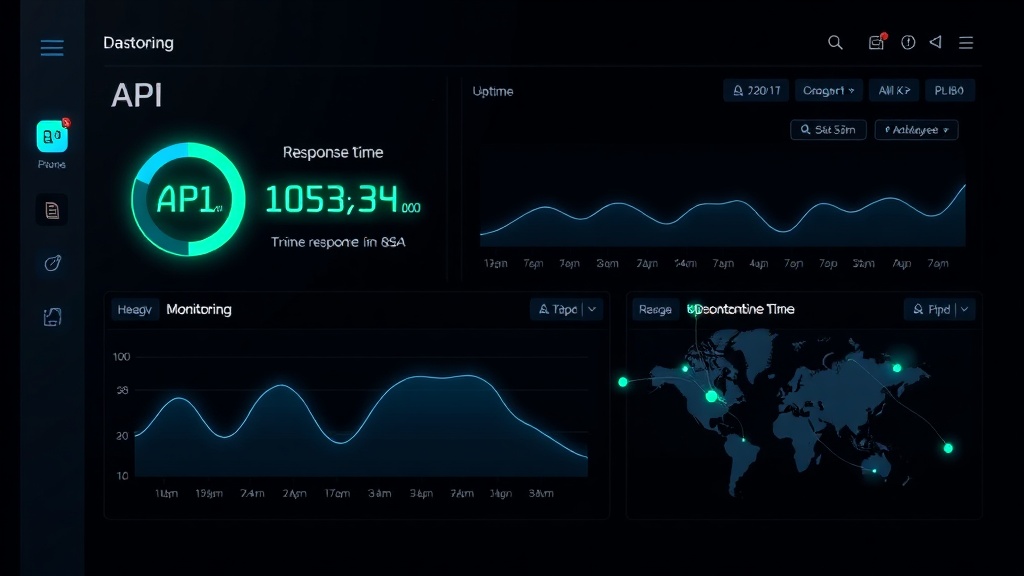
TL;DR: Monitor your APIs effectively by tracking uptime, response times, error rates, and setting up multi-region checks. Use synthetic monitoring, establish baseline metrics, configure smart alerts, and implement comprehensive logging to maintain peak API performance.
Why API Monitoring Matters More Than Ever in 2026
Your API is the backbone of your digital ecosystem. When it fails, everything connected to it fails too — mobile apps, web services, partner integrations, and customer experiences.
In 2026, users expect sub-second response times and 99.9%+ uptime. A single minute of API downtime can cost businesses thousands of dollars in lost revenue and customer trust. That's why proactive monitoring isn't optional anymore — it's survival.
Core Metrics to Track for API Health
Response Time Monitoring
Response time is your API's most critical performance indicator. Track these key metrics:
- Average response time across all endpoints
- 95th percentile response time to catch performance outliers
- Response time by endpoint to identify bottlenecks
- Geographic response times for global applications
Set baseline thresholds based on your SLA requirements. Most modern APIs should respond within 200-500ms for optimal user experience.
Uptime and Availability Tracking
Uptime monitoring goes beyond simple ping tests. Monitor:
- HTTP status codes (200, 404, 500, etc.)
- SSL certificate validity and expiration dates
- DNS resolution times and failures
- Complete request-response cycles with authentication
Aim for 99.9% uptime minimum. Industry leaders target 99.99% or higher.
Error Rate Analysis
Track error patterns to prevent cascading failures:
- 4xx errors indicating client-side issues
- 5xx errors showing server-side problems
- Timeout errors revealing performance issues
- Rate limiting triggers and quota breaches
Setting Up Comprehensive API Monitoring
1. Implement Multi-Region Monitoring
Don't rely on single-point monitoring. Set up checks from multiple geographic locations to:
- Detect regional outages or performance issues
- Validate CDN and edge server performance
- Ensure global user experience consistency
- Identify network routing problems
Use at least 3-5 monitoring locations spread across different continents.
2. Create Synthetic Monitoring Workflows
Synthetic monitoring simulates real user interactions with your API. Build test scenarios that:
- Authenticate with your API using real credentials
- Execute common user workflows end-to-end
- Test edge cases and error handling
- Validate response data integrity and structure
Example synthetic test for an e-commerce API:
1. POST /auth/login → Verify 200 response + auth token
2. GET /products?category=electronics → Check response time < 300ms
3. POST /cart/add → Validate item addition and inventory update
4. GET /cart → Confirm cart contents accuracy
3. Configure Smart Alerting Rules
Avoid alert fatigue with intelligent notification rules:
- Escalating alerts: Start with team notifications, escalate to management after 5+ minutes
- Threshold-based triggers: Alert when response time exceeds 2x baseline for 3 consecutive checks
- Geographic correlation: Only alert if multiple regions report issues simultaneously
- Maintenance windows: Suppress alerts during planned maintenance
Set up alerts via multiple channels — Slack, email, SMS, and PagerDuty for critical issues.
Advanced Monitoring Techniques for 2026
API Performance Baselines
Establish dynamic baselines rather than static thresholds. Your API performance varies by:
- Time of day and traffic patterns
- Seasonal usage spikes
- Feature releases and code changes
- Third-party dependency performance
Use machine learning algorithms to detect anomalies based on historical patterns rather than fixed thresholds.
Real User Monitoring (RUM)
Combine synthetic monitoring with real user data:
- Track actual user API calls and response times
- Identify performance issues affecting specific user segments
- Correlate API performance with business metrics
- Detect issues that synthetic tests might miss
Dependency Chain Monitoring
Modern APIs depend on multiple services. Monitor the entire dependency chain:
- Database performance and connection pool health
- Third-party API response times and availability
- Cache hit rates and Redis/Memcached performance
- Message queue processing times and backlog size
Map your API's critical path and monitor each component.
Implementing Response Time Optimization
Database Query Performance
Slow database queries are the #1 cause of API response time issues:
- Monitor query execution times in production
- Identify N+1 query problems and missing indexes
- Track connection pool utilization and timeouts
- Set up slow query logging with configurable thresholds
Caching Strategy Monitoring
Track cache effectiveness across your API:
- Cache hit rates by endpoint and data type
- Cache invalidation patterns and timing
- Memory usage and eviction policies
- Distributed cache synchronization delays
Optimize cache TTL values based on actual usage patterns.
Load Balancer Health Checks
Monitor your load balancing layer:
- Server response times across all backend instances
- Health check failures and automatic failover events
- Traffic distribution and potential hotspots
- SSL termination performance and certificate rotation
Monitoring Tools and Platform Selection
Choose monitoring tools that scale with your needs:
For startups and small teams:
- Status pages with built-in monitoring (like Livstat) offer comprehensive API monitoring with user-friendly dashboards
- Pingdom or UptimeRobot for basic uptime checks
- Application-level monitoring with built-in analytics
For enterprise environments:
- Datadog or New Relic for full-stack observability
- Custom Prometheus + Grafana setups for maximum flexibility
- Multi-vendor strategies to avoid single points of failure
Best Practices for API Monitoring in 2026
Documentation and Runbooks
Maintain clear procedures for common scenarios:
- Incident response playbooks with step-by-step troubleshooting
- Escalation procedures with contact information and timelines
- Historical incident analysis to prevent recurring issues
- Recovery time objectives (RTO) and recovery point objectives (RPO)
Team Collaboration
Ensure your monitoring strategy supports effective teamwork:
- Shared dashboards accessible to development, operations, and business teams
- Integrated communication tools for real-time collaboration during incidents
- Post-incident reviews to improve monitoring and response procedures
- Regular monitoring health checks to validate alert accuracy
Continuous Improvement
Treat monitoring as an evolving capability:
- Regular threshold tuning based on application changes and growth
- New endpoint coverage as your API expands
- Performance benchmark updates aligned with business requirements
- Monitoring tool evaluation to leverage new capabilities and cost optimizations
Building a Monitoring Dashboard Strategy
Create role-specific dashboards for different stakeholders:
Executive Dashboard:
- Overall API availability percentage
- Business impact metrics during outages
- Trend analysis and month-over-month comparisons
- Customer-facing status page integration
Engineering Dashboard:
- Real-time response time graphs
- Error rate breakdowns by endpoint
- Dependency health status
- Active alert summary with severity levels
Operations Dashboard:
- Infrastructure resource utilization
- Database and cache performance metrics
- Third-party service status
- Automated remediation action logs
Conclusion
Effective API monitoring in 2026 requires a multi-layered approach combining uptime checks, response time tracking, error analysis, and comprehensive alerting. Focus on proactive monitoring that prevents issues rather than just detecting them after they impact users.
Start with the basics — uptime and response time monitoring from multiple locations — then gradually add synthetic testing, real user monitoring, and dependency tracking. Remember that the best monitoring strategy is one that your team actually uses and trusts to guide critical decisions.
Regular review and optimization of your monitoring setup ensures it evolves with your API and business needs, maintaining the reliability your users expect.