How to Write Effective Incident Post Mortems (2026 Guide)
Learn how to write incident post mortems that prevent future outages and build team trust. Includes templates and real-world examples from 2026.
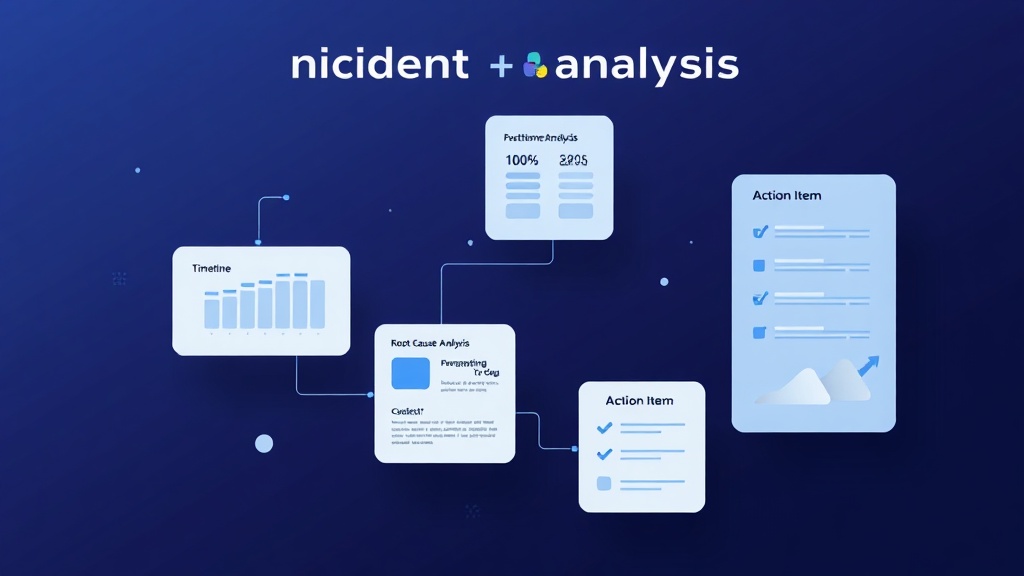
TL;DR: Effective incident post mortems should be blameless, actionable, and focused on systemic improvements. Follow a structured format covering timeline, root cause analysis, and concrete action items. Publish within 48 hours while details are fresh, and track completion of follow-up tasks to ensure lasting impact.
Why Post Mortems Matter More Than Ever in 2026
Every system fails eventually. The difference between high-performing teams and struggling ones isn't the absence of incidents — it's how they learn from them.
Post mortems have evolved beyond simple incident reports. In 2026, they serve as crucial documentation for compliance audits, team knowledge sharing, and customer trust building. Companies that publish transparent post mortems see 23% higher customer retention after major incidents compared to those that don't communicate openly.
The stakes are higher now. With increased regulatory scrutiny and customer expectations for transparency, a poorly written post mortem can damage your reputation as much as the original incident.
The Anatomy of an Effective Post Mortem
Start with the Executive Summary
Your post mortem should begin with a clear, jargon-free summary that anyone can understand. Include:
- Impact statement: How many users were affected and for how long
- Root cause: The fundamental reason the incident occurred (one sentence)
- Resolution: What fixed the immediate problem
- Prevention: Top 3 actions being taken to prevent recurrence
Example: "On March 15, 2026, our authentication service experienced a 45-minute outage affecting 12,000 users due to a misconfigured load balancer. We resolved the issue by reverting the configuration and are implementing automated configuration validation to prevent similar incidents."
Build a Detailed Timeline
Create a chronological account of events using UTC timestamps. Include:
- First customer reports or monitoring alerts
- Key investigation milestones
- Attempted fixes (both successful and unsuccessful)
- Communication touchpoints
- Full resolution confirmation
Pro tip: Use your monitoring tools and chat logs to reconstruct accurate timestamps. Tools like Livstat automatically capture detailed incident timelines that make this process much easier.
Conduct Root Cause Analysis
This is where most post mortems fail. Instead of stopping at the immediate technical cause, dig deeper using the "5 Whys" technique:
- Why did the service go down? The database ran out of connections
- Why did it run out of connections? Connection pooling wasn't configured properly
- Why wasn't it configured properly? No documentation existed for the setup process
- Why was there no documentation? We didn't include it in our deployment checklist
- Why wasn't it in the checklist? We don't have a systematic way to update checklists based on incidents
The real root cause isn't the database connection — it's the lack of systematic process improvement.
Writing with a Blameless Culture
Focus on Systems, Not People
Blameless doesn't mean accountability-free. It means focusing on systemic failures rather than individual mistakes. Instead of "John forgot to update the configuration," write "The deployment process didn't include configuration verification steps."
Avoid: "The engineer on call took 20 minutes to respond"
Better: "Our alerting system didn't escalate according to our defined SLA"
Use Neutral Language
Replace emotionally charged words with neutral alternatives:
- "Failed" → "Did not function as expected"
- "Broke" → "Became unavailable"
- "Forgot" → "Did not include"
- "Stupid mistake" → "Process gap"
Acknowledge Human Factors
Recognize that humans make predictable errors under stress. Design systems that account for this reality rather than expecting perfection.
Making Action Items That Actually Happen
The SMART Framework
Every action item should be:
- Specific: Clear scope and deliverables
- Measurable: Defined success criteria
- Assignable: Single owner (not a team)
- Realistic: Achievable with available resources
- Time-bound: Specific deadline
Poor example: "Improve monitoring"
Better example: "Sarah will implement CPU utilization alerts for all production databases with 80% warning and 90% critical thresholds by April 1, 2026"
Categorize Your Actions
Group action items by type to ensure comprehensive coverage:
- Immediate fixes: Band-aid solutions to prevent recurrence
- Short-term improvements: Address direct causes (1-4 weeks)
- Long-term investments: Systemic improvements (1-3 months)
- Process changes: Update procedures and documentation
Track Completion
Assign each action item a unique ID and track progress publicly. Create a simple dashboard showing:
- Action item status (Not Started, In Progress, Complete)
- Owner and due date
- Link to relevant pull request or documentation
Public tracking increases accountability and demonstrates commitment to improvement.
Communication Best Practices
Know Your Audience
Tailor your post mortem for different stakeholders:
- Customers: Focus on impact, resolution, and prevention
- Internal teams: Include technical details and lessons learned
- Executives: Emphasize business impact and strategic improvements
- Regulatory bodies: Ensure compliance with reporting requirements
Time Your Publication
Publish post mortems within 48 hours while details are fresh and stakeholder attention is high. For complex incidents, release a preliminary report quickly followed by a comprehensive analysis.
Timeline example:
- T+2 hours: Initial incident communication
- T+24 hours: Preliminary post mortem with basic timeline
- T+48 hours: Complete post mortem with full analysis
Choose the Right Distribution
Share your post mortem through multiple channels:
- Public blog: For customer-facing incidents
- Internal wiki: For all incidents with full technical details
- Team meetings: Discuss lessons learned face-to-face
- Status page: Link from incident updates for transparency
Common Post Mortem Pitfalls to Avoid
The Blame Game
Even subtle blame undermines psychological safety. Review your draft for phrases that imply individual fault rather than system failure.
Analysis Paralysis
Don't delay publication while searching for the "perfect" root cause. Sometimes multiple contributing factors exist, and that's okay to acknowledge.
Action Item Overload
Limit action items to 5-7 maximum. Too many dilutes focus and reduces completion rates. Prioritize based on impact and effort required.
Technical Jargon Overload
Write for your least technical stakeholder first, then add technical details in appendices or separate sections.
Building a Post Mortem Template
Create a standardized template to ensure consistency and completeness:
# Incident Post Mortem: [Brief Description]

## Executive Summary
- Impact:
- Duration:
- Root Cause:
- Status:

## Timeline (UTC)
[Chronological events]

## Root Cause Analysis
[5 Whys or similar methodology]

## What Went Well
[Positive aspects of response]

## What Went Wrong
[Areas for improvement]

## Action Items
[SMART action items with owners and dates]

## Lessons Learned
[Key takeaways for the organization]
Measuring Post Mortem Effectiveness
Track these metrics to improve your post mortem process:
- Time to publication: Average hours from incident resolution to post mortem
- Action item completion rate: Percentage completed within deadline
- Repeat incident rate: Incidents with similar root causes
- Team engagement: Comments and discussion on post mortems
Regularly review these metrics and adjust your process accordingly.
Conclusion
Effective incident post mortems transform failures into learning opportunities. By focusing on systems rather than individuals, creating actionable improvement plans, and communicating transparently, you build resilience and trust.
Remember: the goal isn't to eliminate all incidents — it's to learn from each one and become stronger as a team. Start with your next incident and apply these principles. Your future self will thank you when facing similar challenges with better preparation and clearer processes.